
A good leather sofa can be an important part of a living room, majlis, office or reception area. It is comfortable, practical and can continue looking good for many years when it is properly maintained.
But leather is not completely resistant to everyday wear.
Regular sitting, friction, sunlight, cleaning products, accidental scratches and general use can gradually affect the surface. You may start noticing small cracks, faded colour, scratches or areas where the leather has become dry and worn.
The good news is that leather sofa repair in Dubai can often restore damaged areas without replacing the entire sofa.
The right repair depends on the type and extent of the damage. Some problems can be treated locally, while more extensive damage may require leather restoration, panel replacement or upholstery work.
At Al Bayt Sofa Repair Dubai, we assess the condition of the sofa before recommending the most suitable repair approach.
Why Do Leather Sofas Get Damaged?
Leather is a durable upholstery material, but it still needs appropriate care.
Over time, several factors can affect its appearance and condition.
Common causes include:
- Daily use
- Constant friction
- Direct sunlight
- Heat and dry indoor conditions
- Improper cleaning
- Strong chemical products
- Sharp objects
- Pets scratching the surface
- Spills and stains
- Age-related wear
- Poor maintenance
In a busy household, the same areas of a sofa can receive thousands of hours of use over several years. It is therefore normal for the seat, armrests and other frequently touched areas to show wear before the rest of the sofa.
Common Leather Sofa Problems
Before deciding whether your sofa needs repair or replacement, it helps to understand the most common types of leather damage.
1. Leather Scratches
Small scratches can appear from keys, furniture movement, pets, accessories or everyday use.
Minor surface scratches may not affect the structure of the sofa, but they can become more noticeable over time.
If the damaged area is treated appropriately, it may be possible to improve its appearance without replacing the complete leather covering.
For deeper scratches, the repair approach will depend on how far the damage has gone into the leather.
2. Cracked Leather
Cracking is one of the most common problems seen in older leather sofas.
When leather becomes dry or loses its flexibility, the surface can start developing fine cracks. These may initially appear around high-use areas such as:
- Seat cushions
- Armrests
- Front edges
- Back cushions
- Headrests
Small cracks should not simply be ignored.
As the surface continues to flex during use, the damaged area may become larger.
Professional leather sofa restoration in Dubai can help determine whether the leather can be repaired or whether a section needs more extensive treatment.
3. Peeling Leather
Peeling is different from a simple scratch.
When the surface coating or upholstery material starts separating, you may notice visible flaking or peeling areas.
This can happen because of age, wear, environmental conditions or the type of material used on the furniture.
The correct solution depends on what the sofa is actually made from.
Not every sofa marketed as “leather” is made from the same material. Genuine leather, bonded leather and synthetic leather can behave differently and may require different repair methods.
For this reason, identifying the material before starting a repair is important.
4. Faded Leather
Leather furniture can gradually lose some of its original colour.
Sunlight is one factor, especially when a sofa is positioned close to large windows.
Frequent cleaning can also affect the finish if unsuitable products are used.
A faded sofa can make an otherwise attractive room look less coordinated.
Depending on the condition of the leather, restoration work may include colour matching and treatment of worn areas.
The goal is not simply to make one damaged spot darker. A good restoration should aim for a consistent overall appearance.
5. Worn Armrests
Armrests receive considerable contact because people naturally place their hands and arms on them.
Over the years, this can lead to:
- Surface wear
- Scratches
- Colour changes
- Cracking
- Loss of finish
Because the damage may be concentrated in one area, a complete sofa replacement may not always be necessary.
A professional inspection can determine whether the armrest can be restored or whether the affected section needs replacement.
6. Damaged Leather Seat Cushions
The seating area is usually one of the hardest-working parts of a sofa.
Continuous pressure can cause the leather surface to wear while the internal cushion may also lose its shape.
This is why a sofa can sometimes have two separate problems at the same time:
Leather damage:
The outer upholstery is cracked, scratched or worn.
Cushion damage:
The internal foam has become flat or uncomfortable.
In such cases, leather repair can potentially be combined with cushion and foam replacement.
This provides a more complete restoration rather than addressing only the visible surface.
Leather Repair or Complete Reupholstery?
This is one of the most important questions homeowners ask.
The answer depends on the condition of the sofa.
Leather Repair May Be Suitable When:
- Damage is limited to certain areas
- The majority of the leather remains in good condition
- The sofa frame is strong
- The cushions are still usable
- The damage is mainly cosmetic
- You want to preserve the existing leather
Reupholstery May Be Better When:
- Large sections are badly damaged
- Leather has deteriorated extensively
- Multiple areas require repair
- The existing material has reached the end of its useful life
- You want to change the colour or style
- The sofa requires a complete makeover
A professional assessment helps determine which option makes sense for the specific sofa.
Can an Old Leather Sofa Be Restored?
In many cases, yes.
Age alone does not mean that a leather sofa needs to be thrown away.
If the frame is structurally sound and the overall design still works for your home, restoration may be worth considering.
Depending on its condition, restoration could involve:
- Surface repair
- Scratch treatment
- Crack repair
- Colour restoration
- Panel replacement
- Cushion replacement
- Foam replacement
- Leather upholstery work
- General furniture repair
This can give an older sofa a renewed appearance while allowing you to keep the furniture you already have.
Leather Sofa Repair for Dubai Homes
Dubai homes can have very different interior styles.
Some customers have modern apartment furniture, while others have large villa sofas, majlis seating or traditional leather furniture.
Regardless of the style, the same principle applies: the repair should suit the furniture rather than using a one-size-fits-all approach.
For example, a heavily used family sofa may need a different solution from a leather sofa placed in a formal sitting room.
The location of the damaged area also matters.
A scratch on the back of a sofa may require a different level of attention than cracking on the main seating area.
How Professional Leather Sofa Repair Works
The exact process depends on the condition and material of the sofa, but professional repair generally starts with inspection.
Step 1: Inspect the Sofa
The damaged areas are examined to understand the type and extent of the problem.
Step 2: Identify the Material
The upholstery material is assessed because different leather and leather-like materials may require different treatments.
Step 3: Determine the Repair Method
The appropriate solution is selected based on the damage.
This could involve localized repair, colour restoration, panel work or more extensive upholstery.
Step 4: Prepare the Damaged Area
The affected area is carefully prepared before the repair work begins.
Step 5: Carry Out the Repair
The damaged section is treated or repaired according to the required method.
Step 6: Match the Finish
Where colour or surface restoration is involved, the finish should blend as naturally as possible with the surrounding leather.
Step 7: Final Inspection
The completed area is checked for appearance, consistency and overall finish.
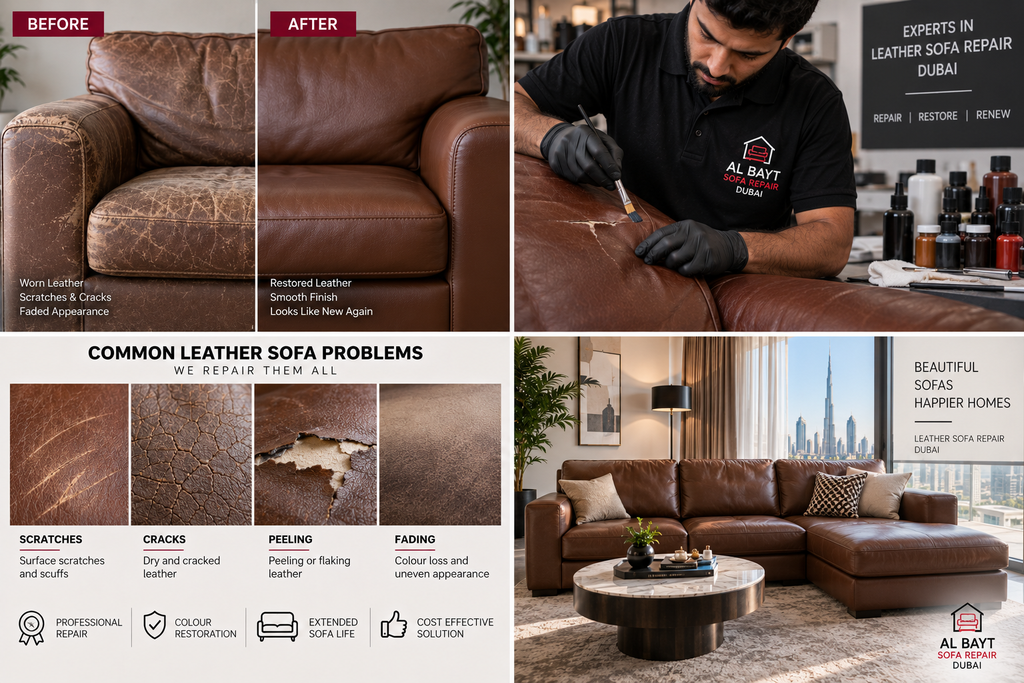
Why Colour Matching Matters in Leather Repair
One of the biggest challenges with leather restoration is achieving a natural-looking finish.
A repair that is technically complete can still look noticeable if the colour does not match the surrounding leather.
Leather also changes colour naturally with age and exposure to light.
Therefore, matching the original factory colour is not always enough. The current condition of the sofa needs to be considered.
Professional leather restoration takes this into account when working on visible areas.
Can Leather Sofa Scratches Be Repaired?
It depends on the depth and location of the scratch.
A light surface mark may be much easier to improve than a deep cut or tear.
The important thing is not to make the damage worse by aggressively rubbing or treating it with unsuitable household products.
If the scratch is significant or you are unsure what type of leather you have, professional assessment is a safer approach.
What About Leather Sofa Tears?
A tear is more serious than a surface scratch because the material itself has been physically damaged.
The appropriate repair method depends on:
- Size of the tear
- Location
- Type of leather
- Condition of surrounding material
- Whether the damaged section can be repaired
- Whether panel replacement is required
For larger damage, attempting a quick cosmetic fix may not provide a durable result.
A professional can inspect the area and determine whether repair or replacement is more appropriate.
Leather Sofa Repair and Cushion Replacement
Sometimes the leather is not the only problem.
You may have a sofa where the upholstery looks worn and the cushions have also become flat.
In this situation, repairing the leather while leaving severely worn foam inside the cushions may not restore the sofa’s original comfort.
Combining:
Leather repair + foam replacement + upholstery work
can provide a more complete restoration when the condition of the sofa requires it.
This is particularly useful for older sofas that have been used heavily for many years.
How to Take Care of a Repaired Leather Sofa
Once your sofa has been restored, regular care can help maintain its appearance.
Keep It Away From Excessive Direct Sunlight
Long-term exposure to strong sunlight can contribute to fading and surface deterioration.
Clean Carefully
Use cleaning products that are appropriate for the specific upholstery material.
Avoid using random household chemicals simply because they work on other surfaces.
Deal With Spills Promptly
Don’t allow liquids to remain on the surface unnecessarily.
Gently address spills using an appropriate cleaning method rather than aggressively rubbing the leather.
Avoid Sharp Objects
Keys, tools and other sharp items can easily scratch upholstery.
Pay Attention to High-Use Areas
Check the seat cushions, armrests and other frequently used areas regularly.
Small problems are generally easier to address before they become extensive.
When Should You Call a Leather Sofa Repair Professional?
You don’t necessarily have to wait until the sofa looks severely damaged.
It can be worth getting professional advice when you notice:
- New cracks
- Peeling
- Deep scratches
- Tears
- Faded areas
- Worn armrests
- Damaged seat surfaces
- Uneven cushions
- Loss of comfort
- Multiple damaged areas
An early assessment can help you understand whether the problem requires a simple repair or a more complete restoration.
Why Choose Professional Leather Sofa Repair in Dubai?
Leather repair is not simply about covering a damaged spot.
The material, colour, texture, damage level and overall condition of the sofa all need to be considered.
A professional service can help identify the underlying issue and recommend a practical solution.
At Al Bayt Sofa Repair Dubai, we handle leather sofa repair alongside upholstery, cushion replacement and furniture repair services.
This means that when a sofa has several problems, the different aspects can be considered together rather than treating each issue separately.
Restore Your Leather Sofa Instead of Replacing It
Replacing a leather sofa can be a major decision.
You may already like its size, shape, comfort and design. It may also fit perfectly into your living room or office.
If the main issue is damaged leather, restoration may be worth exploring before purchasing completely new furniture.
A professional inspection can help you understand the condition of the sofa and whether repair is practical.
In some cases, restoring the existing furniture can give it a completely refreshed appearance without losing the character and design you already like.